


The world鈥檚 media needed an expert when a massive ship blocked one of the world鈥檚 busiest trading routes in March. A love of history and a life at sea prepared Dr. Sal Mercogliano for this moment.
By Billy Liggett
There鈥檚 a moment less than two minutes into Ali Velshi鈥檚 interview with history professor and former merchant marine Dr. Sal Mercogliano about the massive ship blocking the Suez Canal where the CNBC host references the 鈥淗orn of Africa鈥� as an alternate route for trade ships unable to get through. Mercogliano doesn鈥檛 blink.
鈥淚f you have to go that extended route, you鈥檙e talking about adding an additional 3,500 miles on a route from Singapore to Rotterdam,鈥� he says cooly. 鈥淲e鈥檙e talking about [an extra] 12 to 14 days, and most importantly, the ports that are expecting to receive these vessels are not seeing them.鈥�
Mercogliano鈥檚 answer goes on for another minute. The interview 鈥� which has been viewed more than 33,000 times on YouTube 鈥� for another three minutes.
And it鈥檚 just a small sampling of what was a whirlwind month for the 羞羞视频 associate professor of history, who also appeared on interviews with BBC, BBC International, the Associated Press, Bloomberg, NPR, CNN, Al Jazeera, Fox, ABC, Sirius XM and TV New Zealand 鈥� to name a few. Mercogliano was also quoted in articles by the New York Times, Washington Post, Reuters, the Los Angeles Times and Guardian 鈥� again, to name a few.
Mercogliano鈥檚 rise to maritime media darling might have happened overnight, but his demand was the result of a lifelong love of water and the mysteries of the deep and a lifetime of study and research of civilization鈥檚 history at sea. And when the Suez Canal 鈥� Egypt鈥檚 152-year-old man-made waterway connecting the Mediterranean Sea and the Red Sea 鈥� was blocked by the massive Ever Given container ship for six days in March shutting down one of the world鈥檚 busiest trade routes and preventing nearly $10 billion worth of goods from getting to their destinations, the world needed answers.
And few could provide them as well as Mercogliano.
鈥淚 think I bring a passion to this subject, and people seem to like it,鈥� he says. 鈥淸The media] wanted somebody enthusiastic and knowledgeable on this subject.
鈥淎nd certainly, I鈥檓 both.鈥�
THE YOUNG MAN AND THE SEA
That enthusiasm and knowledge came early in Mercogliano鈥檚 life, growing up along the south shore of Long Island in Massapequa, New York. His family lived 鈥渞ight on the water,鈥� he says, and his father鈥檚 passion was fishing on his 30-foot boat.
鈥淭hat鈥檚 what he loved to do,鈥� Mercogliano recalls. 鈥淥n weekends, he and his buddies would go out, and I鈥檇 tag along, and we鈥檇 go 50 to 100 miles out into the Atlantic and fish. By the time I was 12, I was driving the boat. They鈥檇 let me drive it out, I would troll the boat, and I would run it back in.
鈥淎nd when you鈥檙e that far out, you see the ships coming in and out of New York City, and I always loved that. That was for me. I just loved the idea of one day being on those ships.鈥�
Mercogliano held onto that dream through high school and to the doorsteps of the Naval Academy after graduation. He was dealt a crushing blow during his final physical when he was told his eyesight was 鈥渟o bad,鈥� he could never be the one thing he wanted to be 鈥� a surface warfare officer. Those are the sailors who operate the most advanced fleet of ships in the world.
鈥淭he Navy pretty much told me I couldn鈥檛 drive the ships,鈥� he recalls. 鈥淚 could still become a limited duty officer, but I couldn鈥檛 do the one thing I wanted. It crushed me. I hadn鈥檛 applied anywhere else after high school. I had thought I was all set.鈥澛�

There was an alternative. Mercogliano knew a young woman at the time whose brother attended the SUNY Maritime College, one of six state maritime academies in the nation with the mission of producing licensed mariners. Mercogliano applied and got in, graduating four years later with a degree in marine transportation (he also played lacrosse there).
As a Merchant Marine 鈥� the term used for civilian mariners manning vessels and transporting goods on U.S. waters 鈥� Mercogliano got to live his dream and, ironically, soon went to work for the Navy in the early 1990s. And because Merchant Marines can be called on by the Coast Guard to assist in times of war, Mercogliano was tasked with piloting a hospital ship in the Persian Gulf.
鈥淲e actually had the Chief of Naval Operations [Admiral Frank Kelso] come on board, and he came up on the bridge 鈥� and I鈥檓 about 23 at the time 鈥� and was introduced to me by the captain,鈥� Mercogliano says. 鈥淎nd he asked me why I wasn鈥檛 in the Navy, and I told him, 鈥楤ecause you wouldn鈥檛 let me in.鈥� So not long after that, the rule changed [on eyesight requirements]. I don鈥檛 know if I had anything to do with it, but I鈥檇 like to think I did.鈥�
His career took him all over the world. The Caribbean, the Mediterranean, the North Sea and the Baltic. Even when he wasn鈥檛 at sea, he remained involved in the maritime industry. Mercogliano also made the decision to continue his education with the hopes of learning more about and eventually teaching about his passion. He earned his master鈥檚 degree in maritime history from East Carolina University in 1997 and his Ph.D. in military and naval history from the University of Alabama in 2004.
In 2008, he became an adjunct professor of history and engineering for the U.S. Merchant Marine Academy (a position he still holds today), and in 2010, he joined 羞羞视频鈥檚 faculty to teach several courses in history.聽

If the sea is Mercogliano鈥檚 first passion, history (and teaching history) isn鈥檛 far behind. During his time on the hospital ship in the 90s, the captain had Mercogliano doing live discussions with the Navy crew about 鈥渨hy we were out there鈥� and 鈥渨hat the ship does,鈥� as many on board were medical personnel who hadn鈥檛 spent much time on a boat (despite being in the Navy). Mercogliano discovered that he enjoyed these discussions, particularly the teaching aspect, as his talks not only covered the technology and history of the vessels, but economics, government and even religion at times.
Maritime history goes back tens of thousands of years (recent research suggests perhaps over 100,000 years) 鈥� long before the era of the Vikings and Columbus. To this day, 90 percent of the world鈥檚 goods are transported by sea. The history is deeper than the oceans themselves, and Mercogliano has become an encyclopedia of knowledge.
鈥淲hat鈥檚 fascinating is that in all these years, the basic technology [of sailing] hasn鈥檛 changed,鈥� he says. 鈥淵ou can take Peter the Viking and propel him 500 years into the future onto Columbus鈥� boat, and he could still figure it out. You can then take Columbus and put him 500 years into the future, and maybe he couldn鈥檛 figure out a toilet, but he鈥檇 still understand a boat.鈥�
Mercogliano never enjoyed public speaking or being in front of large groups, but he found that when the discussion revolved around ships and maritime history, he was more at ease. And he enjoyed it.
Even getting in front of television cameras 鈥� for interviews broadcast all over the world 鈥� is easier when you know what you鈥檙e talking about.
AT EASE
On March 23, a 20,000 TEU-class container ship called the Ever Given was buffeted by strong winds and wound up wedged across the waterway of the Suez Canal 鈥� its bow and stern stuck in the canal banks, blocking access for all ships behind it until it could be freed.
For six days, the ship shut down access at one of the world鈥檚 busiest trade routes 鈥� at least 369 ships were either grounded or forced to find another route. An estimated $10 billion in trade was affected.
The event made global news, and media outlets around the world were scrambling to talk to somebody with knowledge of the Suez Canal and global sea trade routes, somebody with knowledge of maritime history, somebody who could explain the economic impact of the canal鈥檚 blockage and, most importantly, somebody who was comfortable on camera and is quick on their feet when tough questions are thrown their way.
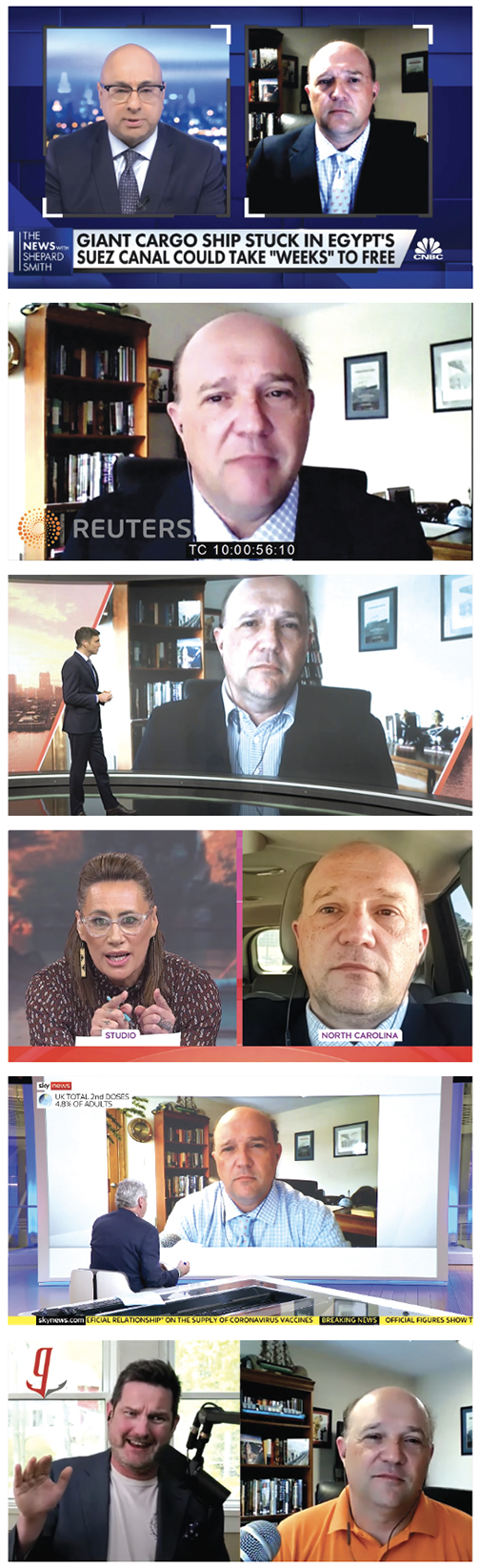
They found all of those qualities in Dr. Sal Mercogliano, an expert in maritime history, nautical archaeology and maritime industry policy.
Over the next week, Mercogliano appeared on nearly 30 national and international radio and television news programs and was quoted in dozens of foreign and national newspapers. Nearly every time, the words 鈥溞咝呤悠碘�� appeared next to his name. It was not only a big moment for the professor, but a big moment for the landlocked University located 110 miles from the nearest beach.
鈥淚t was a big story,鈥� says Mercogliano. 鈥淭he Suez Canal is responsible for 12 percent of the world鈥檚 trade. It鈥檚 what we call a 鈥榤aritime choke point,鈥� a topic I was already writing an essay about for the Center for International Maritime Security. The canal has been closed by ships in the past, but nothing in this scope or on this scale, because this was done by one of the largest ships in the world.鈥�
His sudden media fame was the result of a number of factors, Mercogliano says. His background as a merchant Marine, his career in higher education, his knowledge of large sailing vessels, his knowledge of the business side of the sea trading industry 鈥� they all contributed to the demand for his insight.
But what set him apart from the hundreds of other maritime history professors or experts in the country with extensive knowledge of trade routes and the global economy?
According to Mercogliano 鈥� lacrosse.
He played lacrosse in high school. He had plans to play for the Naval Academy, but when his eyesight caused a course correction, he wound up playing at SUNY. And when he learned shortly after joining the faculty at 羞羞视频 that the University would launch a women鈥檚 lacrosse program in 2013, Mercogliano 鈥� who helped start a women鈥檚 club team at Methodist University during his stint there 鈥� wanted to be involved.
鈥淲hen it started here, it was such a tiny program,鈥� he says. 鈥淲e only had enough girls to field a team, but they needed extra bodies for practice 鈥� so I鈥檇 show up, throw the ball around and serve as an extra stick when they needed one.鈥�
Mercogliano invited assistant athletics director and 鈥淰oice of the Camels鈥� Chris Hemeyer to speak at a Lunch and Learn program for his students that year, and Hemeyer asked him if he would be interested in providing color commentary for radio and TV broadcasts of the new program. Mercogliano was hesitant 鈥� 鈥淚t鈥檚 one thing to speak to a room of students, but it鈥檚 another to go on camera and not seeing your audience鈥檚 reactions鈥� 鈥� but he eventually agreed to do it. And he did it so well, ESPN asked him to be part of the broadcast team for a Big South lacrosse championship game (which did not include 羞羞视频).
鈥淚 got very comfortable doing it,鈥� he says. 鈥淏efore, I was always worried about saying something wrong or worried people would think I鈥檓 terrible. After a while, you realize you did fine. And it鈥檚 not like people are judging you 鈥� they鈥檙e watching a game.鈥�
Lacrosse put Mercogliano at ease in front of a camera. Prior to the Suez Canal incident, he鈥檇 appeared in several on-camera interviews about maritime policy or other similar (but less newsworthy) events.
鈥淪omething producers have told me over and over after these interviews, 鈥榊ou鈥檙e a natural at this.鈥� And I鈥檝e had a few people tell me that I seem to be really enjoying myself through all of this, and to be honest with you, I am,鈥� he says.
鈥淟ook, I felt terrible that 12 percent of the world鈥檚 economy was close to collapsing, but this is what I鈥檝e studied my entire life.鈥�
THE CALLS KEEP COMING
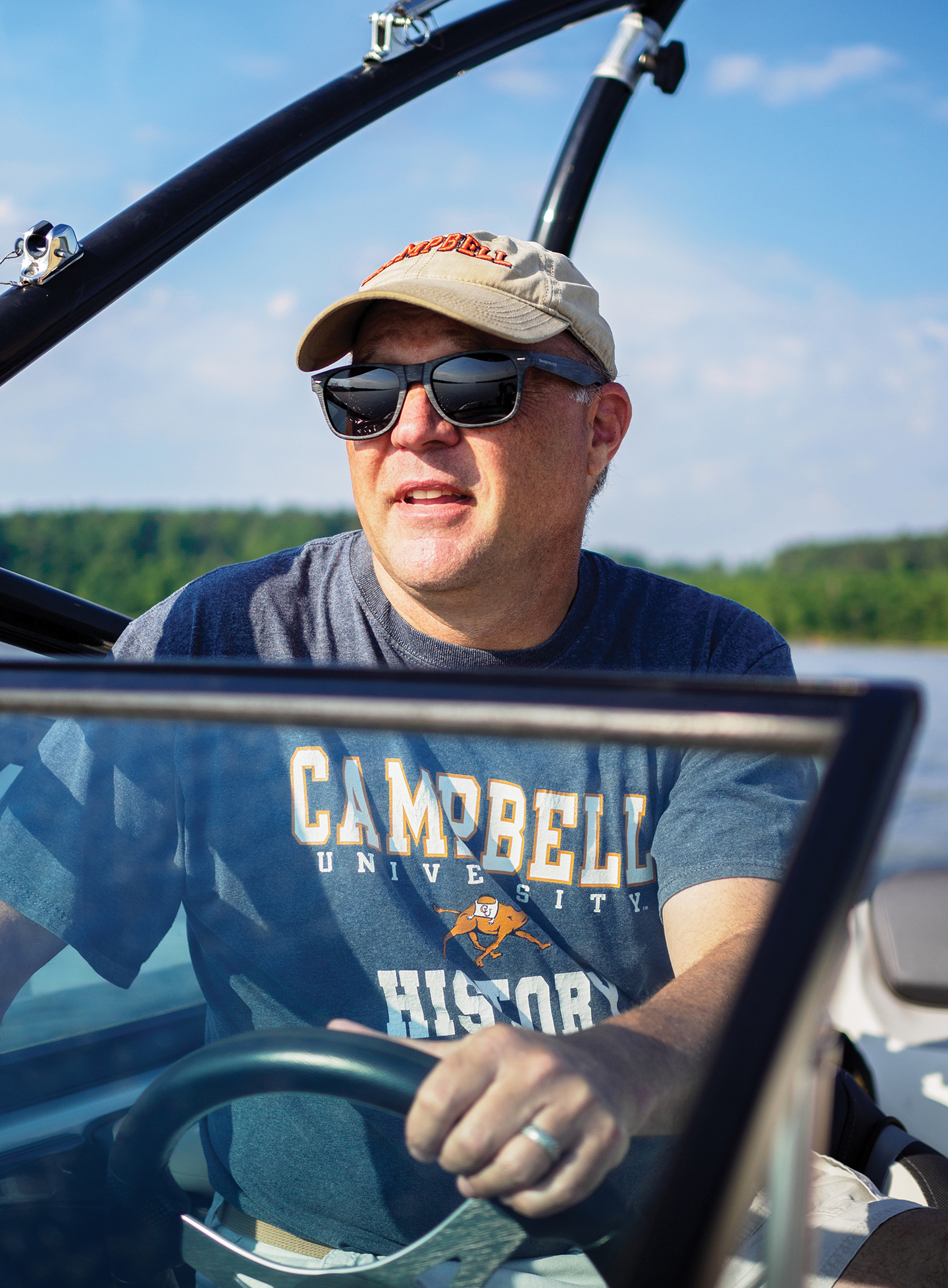
Harris Lake is a far cry from the ocean that inspired a life鈥檚 work. But for Mercogliano, the quiet tree-lined body of water located just 20 miles from 羞羞视频鈥檚 main campus is the ideal spot to unload his boat and spend time with his 13-year-old son, Christopher.
It does raise the question: How does a Long Island native and lifelong mariner find happiness teaching in a town surrounded by tobacco fields, 100-plus miles from the nearest ocean?

At 羞羞视频, he found stability. He found his port.
鈥淒uring the 10 years prior to coming here, I jumped around a lot,鈥� he says. 鈥淚 had a lot of temporary positions 鈥� a lot of one-year jobs. ECU. UNC. West Point.鈥�
Mercogliano and his wife, Kathy, were already living in Buies Creek before he joined the faculty at 羞羞视频 鈥� Kathy was attending the law school before it moved to Raleigh in 2009, and the couple lived in the small trailer park located where the Pope Convocation Center sits today. Mercogliano served as an adjunct professor, but he was approached in 2010 to teach Western civilization and other history courses full time. Soon, the young family built a house in nearby Fuquay-Varina.
羞羞视频 became 鈥渉ome.鈥� Mercogliano immersed himself in the community outside of the classroom, not only through his work with 羞羞视频 Athletics, but as a volunteer with the Buies Creek Fire Department and by volunteering to serve on committees and other organizations.
He became popular in the classroom, too. In 2013, his colleagues honored him with the D.P. Russ Jr. and Walter S. Jones Sr. Alumni Award for Excellence in Teaching. Twice in a four-year span from 2012 to 2015, he was chosen by the student body as Professor of the Year, and in 2015, he was the recipient of the College of Arts & Sciences鈥� Dean鈥檚 Award for Teaching Excellence. In 2021, he was named chair of 羞羞视频鈥檚 history department.
鈥淚t鈥檚 especially important to me to be acknowledged by both students and faculty,鈥欌�� Mercogliano said back in 2015. 鈥淚 run a class that isn鈥檛 an easy class by any measure … In fact, it鈥檚 pretty tough and my students are usually challenged. But these honors vindicate [that approach] … It tells me what I鈥檓 doing is helping students and influencing them in their careers.鈥�
Six years later 鈥� sitting in an idle boat in the middle of Harris Lake 鈥� he reveals another factor in his popularity.
鈥淭he best critique I ever got back from a student was, 鈥榊ou made me stay awake,鈥欌�� he says with a laugh. 鈥淚 just really like being here. You know, I鈥檝e worked at big universities where you only know the people in your department. At 羞羞视频, you get to know everybody across campus, and you get to be a part of the community. That鈥檚 one of the nice things about being here.鈥�
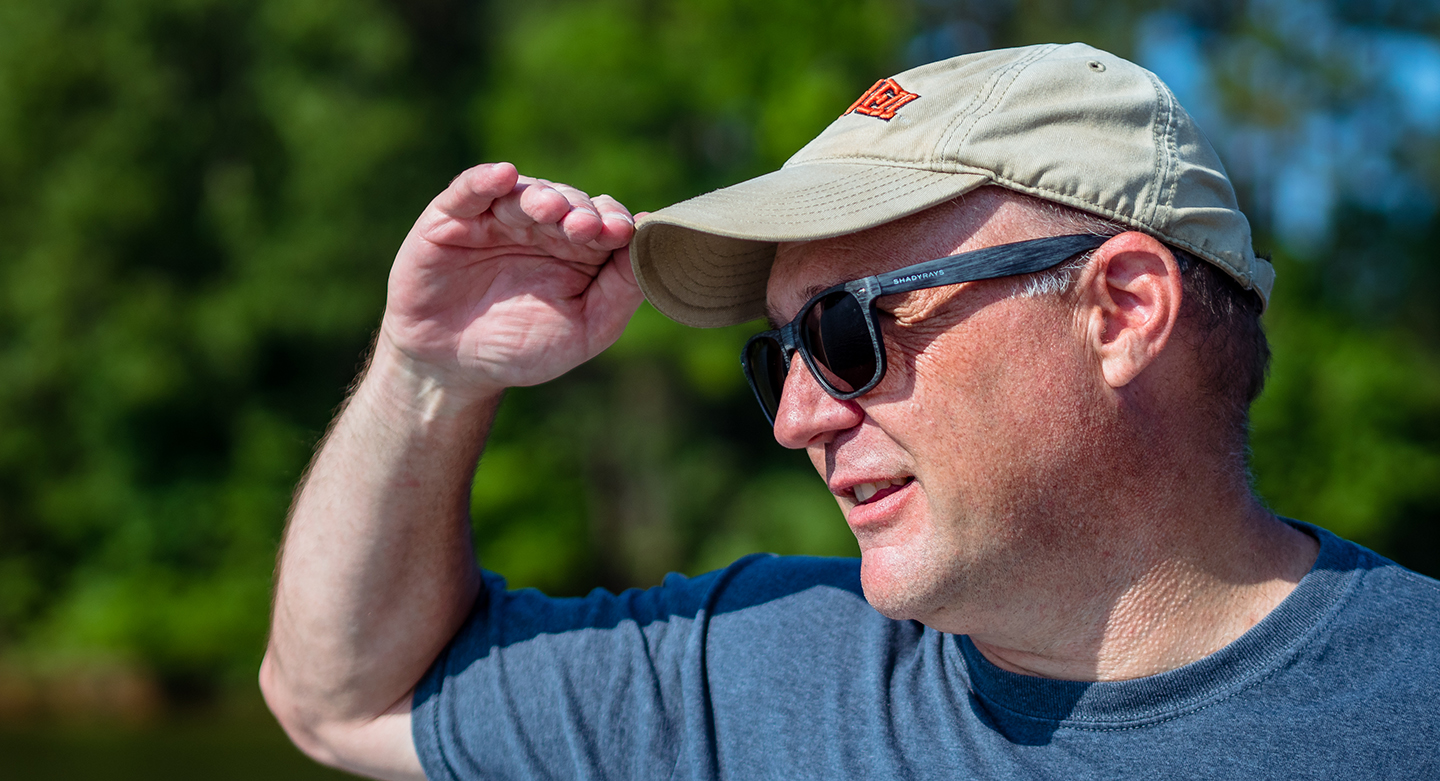
Three months after the Ever Given incident, well into mid-June, Mercogliano was still being quoted about the story in large international publications 鈥� the most recent being a Wired UK article titled, 鈥淭he Untold Story of the Big Boat that Broke the World.鈥� He also appeared in articles about who will be the next U.S. Maritime Administration chief and an Iranian warship bringing millions of gallons of fuel to Venezuela.
The media is also turning to Mercogliano to be a consultant.
鈥淚 get calls now asking if I can recommend people on different subjects,鈥� he says. 鈥淚 got a call from Ali Velshi鈥檚 show [on CNBC] after an Indonesian submarine went down asking if I knew anybody who knows about submarines. I said, 鈥楽ure. Here鈥檚 a list of people to talk to.鈥欌��
Seventy-one percent of the world is made up of water, and the oceans hold 96.5 percent of it. Mercogliano has always known this, and he鈥檚 known about the impact it has on our everyday lives.
Now, he鈥檚 finally realized that there will always be a demand for somebody who can talk about that impact. And he鈥檚 finally comfortable being that person.
鈥淚t鈥檚 funny, because when the ship got pulled out, I pretty much figured my 15 minutes of fame would be over,鈥� he says. 鈥淚 knew it was fleeting, and I kept telling myself it was going away. But I鈥檓 still getting calls. It鈥檚 not going away.鈥�